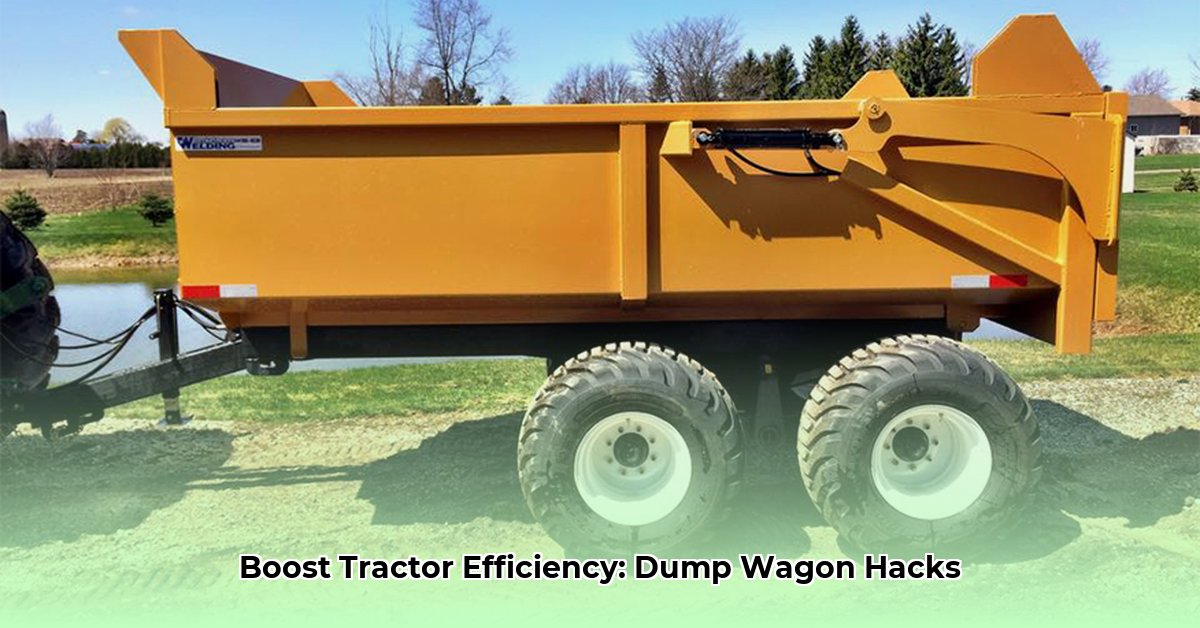
Sustainable agriculture demands efficient resource management. A strategically used dump wagon significantly boosts productivity while minimizing environmental impact. This guide provides a comprehensive approach to maximizing your dump wagon's potential. It covers selection, safe operation, efficiency optimization, cost-benefit analysis, and environmental considerations. Are you ready to optimize your farming operations? For more information on tractor wagons, check out this helpful resource: John Deere Wagons.
Choosing the Right Dump Wagon
Selecting the optimal dump wagon requires careful consideration of several factors to ensure a strong return on investment (ROI). The wrong choice can lead to inefficiency and added costs. What are the core elements to keep in mind?
Capacity and Dimensions
First, determine the typical size of your hauls. An oversized wagon leads to wasted fuel and unnecessary trips, while an undersized one necessitates excessive runs. Accurate estimation of your regular load size and future expansion needs is crucial. Don't underestimate your hauling needs – future growth should be factored into your decision. A slightly larger wagon may be a better investment if your farm is expected to expand.
Material Selection: Steel vs. Aluminum
The choice between steel and aluminum significantly influences weight, durability, cost, and environmental impact. Steel offers superior durability and longevity. However, it's heavier, resulting in reduced fuel efficiency. Aluminum is lighter, improving fuel economy. However, it might necessitate more frequent maintenance and has a potentially shorter lifespan. The ideal material depends on load type and terrain. Heavy loads on rugged terrain favor steel's superior strength. Lighter loads on smoother surfaces benefit from aluminum's lighter weight and higher fuel efficiency.
Hitch Compatibility
Prior to purchasing, confirm compatibility with your tractor. Different hitches offer varying degrees of maneuverability and towing capacity. Incompatible hitches compromise safety and operational efficiency, leading to potential accidents or reduced productivity. Always verify hitch compatibility before making your purchase. Consult your tractor's manual or contact your dealer for accurate information.
Essential Features
Various features enhance efficiency and ease of use. Hydraulic lifts significantly reduce labor and time compared to manual lifts, while sideboards facilitate handling of loose materials like grain or hay. Consider these added features to enhance productivity and convenience. These additional features could be crucial if you're dealing with heavy or bulky materials. Weigh this added investment against the increased efficiency achieved.
| Feature | Steel Wagon | Aluminum Wagon |
|---|---|---|
| Durability | High | Moderate |
| Weight | High (impacts fuel efficiency) | Low (improves fuel efficiency) |
| Maintenance | Less frequent | More frequent |
| Initial Cost | Generally Lower | Generally Higher |
| Fuel Efficiency | Lower (due to higher weight) | Higher (due to lower weight) |
| Lifespan | Potentially Longer | Potentially Shorter (depends on usage) |
Safe Operation and Maintenance
Prioritizing safety is non-negotiable. Regular maintenance prevents costly repairs and ensures operational safety. What are the critical steps to ensure your safety and the equipment's longevity?
Pre-Operation Inspection
Before each use, meticulously inspect all components: hitch connections, brakes, tires, and hydraulic systems (if applicable). This preventative measure detects potential issues early, ensuring safe operation and preventing costly unplanned downtime. A simple pre-operation check can save you from significant problems down the line.
Hitching Procedures
Follow the manufacturer's instructions precisely when hitching and unhitching the wagon. Shortcuts compromise safety. Correct hitching is non-negotiable. Ensure a secure connection to prevent accidents and equipment damage. Review the instructions carefully. Always double-check hitch connections before operation.
Secure Loading and Unloading
Prevent tipping by evenly distributing the load, particularly important with uneven terrain. Load materials from the center outwards to maintain balance. Overloading is a significant safety risk and can lead to costly damage. Take your time, and avoid rushing the process.
Regular Maintenance
Regular lubrication of moving parts and prompt attention to problems minimizes wear and tear. Preventative maintenance extends lifespan and prevents costly emergency repairs. A preventative maintenance schedule is a sound investment in your equipment's longevity.
Optimizing Efficiency: Maximizing Your Investment
Efficiency gains translate directly into higher profits. What strategies can you implement to enhance your productivity?
Efficient Loading and Unloading
Develop strategies to minimize loading and unloading time. Consider your workflow and implement procedures that accelerate the process. This can significantly reduce labor costs and increase your operational efficiency.
Route Optimization
Plan routes strategically to minimize travel time and fuel consumption. GPS technology helps optimize routes, considering terrain, traffic, and weather conditions. Efficient route planning reduces downtime and fuel costs.
Technology Integration
Integrate your dump wagon operations with your precision agriculture technology, like automated guidance systems. This can enhance overall farm management and increase efficiency.
Cost-Benefit Analysis and Environmental Impact
A holistic cost-benefit analysis, encompassing initial investment, running costs, and environmental impact, is crucial.
Upfront and Ongoing Costs
Estimate the total cost of ownership, factoring in purchase price, delivery, modifications, fuel consumption, maintenance, repairs, and labor. This comprehensive assessment is vital for informed decision making.
Long-Term ROI
Calculate the return on investment (ROI) over the wagon's lifetime. Higher efficiency, reduced labor costs, and fuel savings contribute to a stronger ROI. Carefully project the long-term financial benefits of your investment.
Environmental Considerations
Minimize environmental impact by selecting materials and fuels with lower environmental footprints. Consider the lifecycle impact of different materials and fuel sources.
Implementing these strategies will maximize your dump wagon's productivity, boost your farm's sustainability, and ensure a strong return on investment.